Blood doping is the practise of boosting the number of red blood cells in the blood stream in order to enhance athletic performance. Because they carry oxygen from the lungs (through haemoglobin) to the muscles more red blood cells in the blood can improve an athletes aerobic capacity (vo2 max) and endurance. Blood doping is illegal and banned in most competitive sports, with methods of detection getting significantly better, with random and often-repeated search of athletes homes. However there is a legal way to boost the number of red blood cells to enhance athletic performance, this can be done by training at altitude. Blood doping can also be used to reduce the amount of latic acid build up letting the athletes perform for longer and harder.
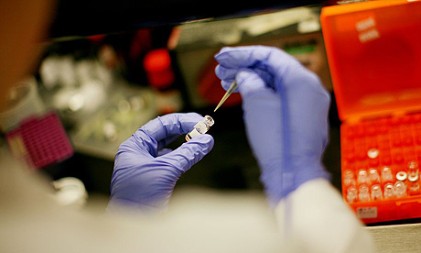
The chemical used in blood doping can cause kidney damage by adding foreign substances into the body on a regular basis. This is because athletes who use prohibited substances often take them in significantly high doeses, and more frequently then these substances would be prescribed for threapuetic purposes. Although blood doping has advantages assositated with it such as: there is an increase in red blood cells, therefore the levels of haemoglobin are increased transporting more oxygen to the working muscles, therefore athletes can perform harder and longer. Recovery rates are increased due to the reduced volume of latic acid, and the amount of oxygen travelling to the recovering muscles. Blood doping has an negative effect on the heart by reducing the heart rate, as when the heart rate is low there are unnaturally high levels of red blood cells in the blood. Blood doping can increase the viscosity of ones blood, however too much viscosity of the blood can be detrimental. It increases the risk of blood clots in the circulatory system, coupling the high viscosity of the blood with endurance events can cause dehydration, which can even lead to a stroke. Cramps are more common and are assosiated with the increase in plasma levels due to the increased red blood cells.
